


Underfloor Heating: What It Costs And What It Needs
27/05/2026
If you’re considering installing underfloor heating (UFH), it’s a fantastic upgrade for comfort and efficiency — but like any heating system, it comes with its up-front and ongoing requirements. Let’s walk through how the costs stack up (without quoting specific prices), what affects them and what you’ll need to keep up with once the system is in place.
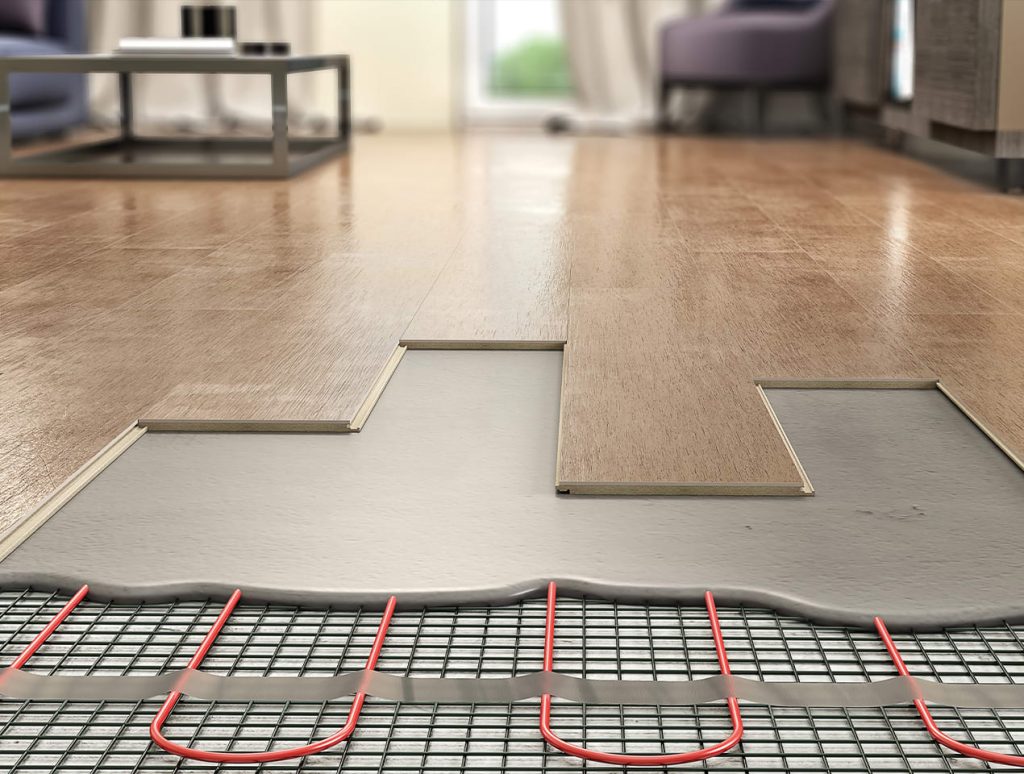
1. Types of underfloor heating and how that impacts cost
There are two main types of UFH systems commonly used:
-
Electric (aka dry-film, cable or mat systems) – These involve electrical cables or mats under the floor surface, connected to your mains electricity.
-
Wet / water-based systems – These consist of pipes embedded in or under the floor, through which heated water from your boiler (or heat pump) flows.
Each type behaves differently in terms of both installation cost and running cost. For instance, wet systems tend to cost more to install, but can be cheaper to run over time.
2. Factors that influence installation cost
When you get a quote for UFH, the cost will depend on:
-
Whether the system is being installed in a new build or a retrofit/renovation (retrofits are typically more complex).
-
The type of system (electric vs wet) and the zone/room size. Larger areas, or whole-house systems, typically cost more.
-
The floor construction and current state: if you have to lift existing flooring, adjust levels, address insulation or make structural alterations, the cost rises.
-
The heat source and compatibility: for wet systems you’ll need a suitable boiler or heat pump, manifold, controls and maybe extra piping. If your boiler is far away, or your system age or layout is awkward, costs increase.
-
The insulation beneath the floor: Good insulation is vital with UFH to prevent heat loss downwards and ensure efficient performance. Skimping here may increase running costs.
3. Installation cost in broad terms
While I won’t quote a specific price, industry sources illustrate the relative expense: electric systems tend to have lower initial cost (especially for smaller rooms or in refurbishment), but wet systems require more labour, pipework and floor‐build up. For example: one guide shows electric at one band, wet systems at a higher band in retrofits.
It’s wise when getting quotes to break down the cost into system vs labour, ask about what’s included (control thermostat, insulation boards, making good flooring, commissioning, etc).
4. Running & lifetime costs
-
One of the great benefits of wet underfloor heating is that because it operates at lower water temperatures and distributes heat across the floor surface, it can be more efficient (especially when paired with a high-efficiency boiler or heat pump).
-
On the flip side, electric UFH – while simpler to install – has higher operating cost per kWh of electricity vs gas/water systems, and therefore may make sense for smaller areas (bathrooms, conversions) rather than whole-house heating.
-
The floor build up and controls matter: good insulation, smart thermostats and zoning the heating so you only heat the zones you need can reduce running costs.
-
Lifetime: a well-installed system with good maintenance can give many years of service. But if the installation is poor (inadequate insulation, wrong floor covering, poor controls) then inefficiency or faults may show earlier.
5. Servicing and maintenance requirements
Here’s where your company (Total Energy Services) can help homeowners understand what to expect:
-
Electric UFH: Once installed by a qualified electrician or UFH specialist, they generally require very little regular servicing. Most failures are due to poor installation rather than the system itself.
-
Wet (water-based) UFH: Because this is connected to your boiler/heat source and includes pipes, manifolds, valves, actuators etc, it benefits from an annual check (similar to a conventional central heating service). For instance, checking for leaks at the manifold, checking controls and balance, ensuring inhibitor fluid is correct and the system is flushing correctly.
-
Some specific maintenance tasks to highlight:
-
Inspect manifold and valves for any signs of leaks or corrosion.
-
Monitor and ensure thermostats and control systems (smart zones etc) are operating properly.
-
Check the system’s balancing, flushing and inhibitor levels (this is particularly relevant when the system has been unused for a period, or in seasonal switches).
-
Ensure the heat source – boiler or heat pump – remains in good order (since inefficiency or fault in the source affects the UFH) and usually this is serviced annually anyway.
-
-
From a user point of view, encourage clients to: keep floor surfaces clean and free of obstructions (which can impede heat transfer), avoid thick insulating floor coverings unless compatible with UFH, and ensure their system is paired with appropriate thermostats and zones.
How can we help?
Installing underfloor heating is a smart choice for many homeowners and we can handle your whole installation end-to-end. Including system choice, controls, installation, commissioning and servicing. While the initial cost is higher than a simple radiator upgrade (especially for water systems in retrofits), the benefits (comfort, efficiency, space saving) make underfloor heating attractive. Servicing is not onerous but regular checks do make a difference — especially to maintain efficiency and prevent small issues becoming big ones.
To book a complimentary heating survey where our surveyor can provide you with a fixed price quotation please call 01258 472132 or fill in the enquiry form.


